
SESL Australia R&D with Smart Construction Materials
SESL Australia has recently undertaken an experimental trial on a recyclable construction material which appears to improve air quality. Durra Panel is a building material made from reclaimed, compressed, and thermally treated waste straw. They are used as structural and insulation components in ceilings and walls. Our client approached us wanting to know whether the panels had any benefits in terms of air quality and SESL Australia’s R&D team got to work!
Volatile organic compounds (VOCs) refer to organic pollutants that have high vapour pressure and low solubility, and become gaseous under normal temperature and pressure. VOCs are commonly used in the manufacture of paints, solvents, glues, building materials and cleaning products, for example, and as such are emitted from these products over time. VOC concentrations are typically higher indoors than outdoors and are a primary cause of poor indoor air quality.
SESL Australia designed an experiment that evaluated the efficacy of the panels in removing the VOCs from the air. Five solvents, representative of common VOCs (acetone, ethyl acetate, n-Hexane, isopropyl alcohol and toluene) were introduced into sealed chambers under controlled conditions, with and without the panels. The trial compared treated panels (impregnated with granular activated carbon or GAC), untreated panels, and a blank condition across low- and high-concentration VOC exposure scenarios.
Across all VOCs tested, both untreated and GAC-treated Durra panels demonstrated rapid VOC reduction compared with the control chamber (without a panel). In low-range conditions, treated panels achieved approximately 1.1 times greater VOC reduction over the full experimental duration (~137 hours). In high-range conditions, treated panels achieved approximately 1.3 times greater VOC reduction within the first 3 hours, followed by sustained performance at approximately 1.1 times greater reduction over the remaining experimental period (~139 hours). The results indicate that incorporation of GAC into Durra panels provides a measurable and consistent improvement in VOC adsorption performance, particularly under short-term, high-exposure conditions relevant to indoor air quality management.
Needless to say, the client was very pleased with the findings and eager for our R&D team to do further research on the efficacy of the panels as a passive mitigation strategy to improve indoor air quality.
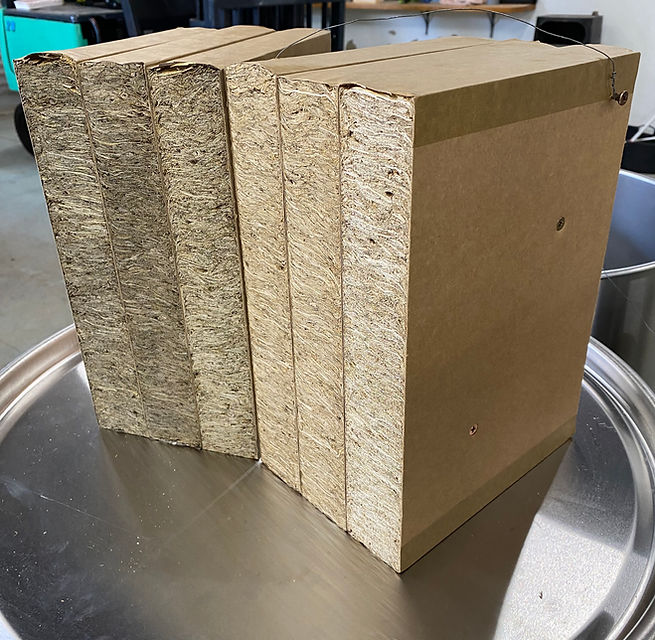
Cross section of Durra Panels with and without granular activated carbon

Measuring VOCs using photoionisation detector
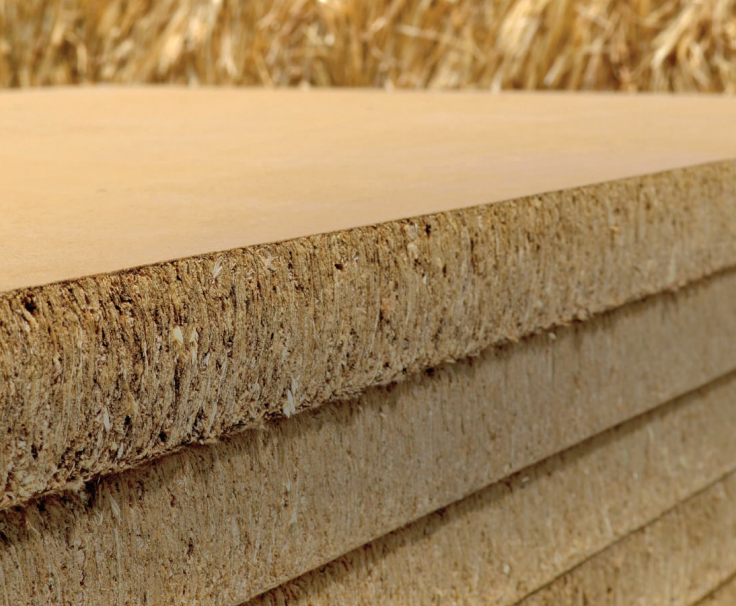
Close up of Durra Panel showing compressed straw matrix and outer paper lining.
.jpg)